

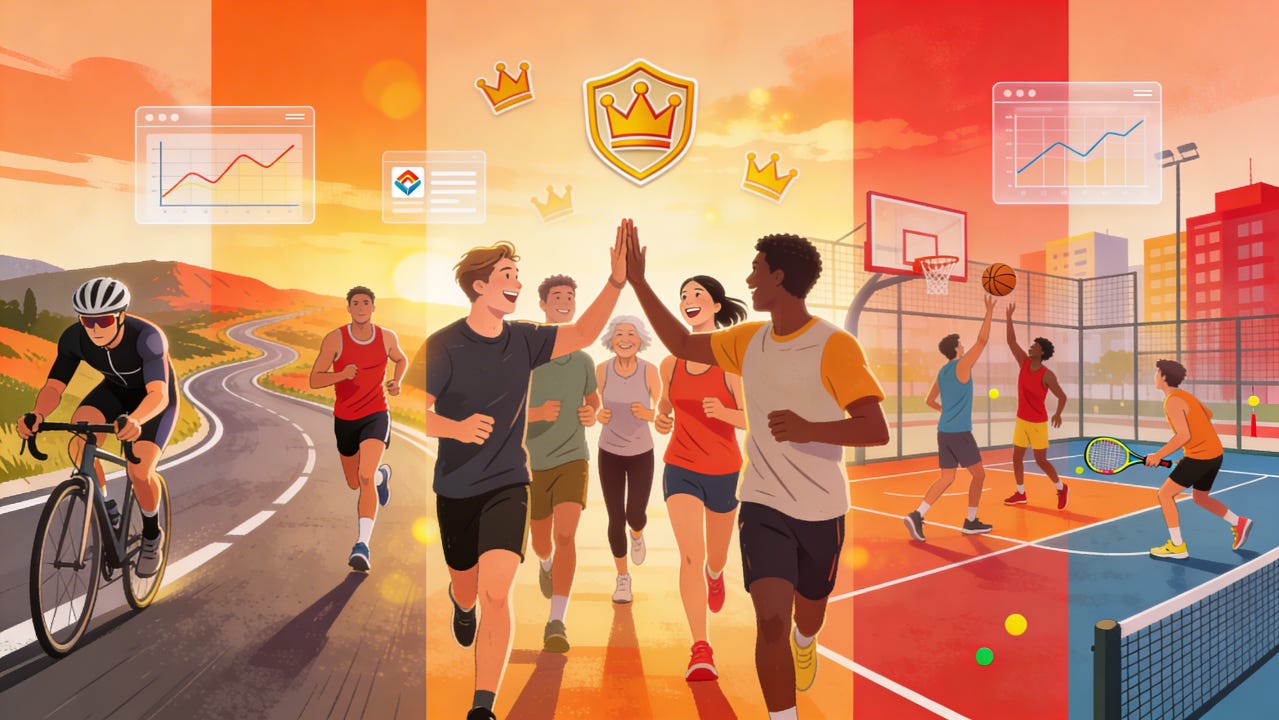
Strava built its reputation as the digital home for cyclists and runners, turning GPS files into stories, leaderboards, and communities. Over the past decade and a half, it has evolved from a niche tool for endurance die‑hards into one of the most important connective layers in global sport. As an early user (athlete #341, joined in 2011), I’ve watched that evolution unfold almost from day one, but this look at Strava is less about my story and more about what Strava’s next chapter means for the sports ecosystem.
Strava’s core: data, community, and neutrality
Strava’s original value proposition was simple and powerful:
Turn raw activity data into meaningful insights and competition.
Wrap those numbers in social features: feeds, kudos, clubs, challenges.
Stay device‑agnostic so athletes could bring whatever hardware they wanted.
The result is a massive, global network: more than 180 million registered users across 185 countries, billions of activities, and a uniquely “horizontal” position across brands, sports, and devices.
The pivot point: from tracker to platform
The company’s February 2026 announcement, adding padel, basketball, volleyball, cricket, and dance as fully recognized sport modes, is more than a product tweak. It marks a clear repositioning:
From: “We are for cyclists and runners who care about performance data.”
To: “We are for anyone who moves, especially when they move together.”
By shifting these activities out of generic “workout” buckets and into specific modes, Strava is quietly redefining itself as a comprehensive activity hub rather than an endurance tracker.
Why this matters now
Strava has confidentially filed for an IPO and is targeting a spring 2026 listing, with a valuation in the roughly $2–3 billion range. To step onto that stage, the company needs to show:
A growth story beyond its original endurance niche.
A subscription and engagement engine that can scale.
A narrative that aligns with how younger generations actually experience sport.
This article examines how the new sport modes, the rise of clubs, and the IPO push fit together, and what they signal for athletes, brands, and the broader sports tech stack.
Why Team and Social Sports Are Strava’s Next Growth Engine
Strava’s decision to formally support padel, basketball, volleyball, cricket, and dance wasn’t random. It’s a targeted play at the way people actually move today, and at the segments of sport that generate the most frequent, social, and sticky engagement.
The strategic logic behind the five new sports
Each new sport addresses a different growth vector:
Padel: Fast‑growing, social, affluent; a gateway into club‑based racket culture across Europe and beyond.
Cricket: A bridge into South Asia and Commonwealth markets where Strava’s presence has been relatively underdeveloped.
Basketball & volleyball: Global, urban, and inherently social: pickup culture, rec leagues, and youth participation.
Dance: A massive recreational fitness category, skewing toward demographics underrepresented in traditional endurance sports.
The common thread: these aren’t just “workouts”; they’re recurring, social events with built‑in communities.
Mobile-first, not hardware-first
Endurance sports built Strava on the back of GPS watches and bike computers. Team and social sports are different:
Players and dancers may not wear specialty devices.
The most realistic capture mechanism is the phone in their pocket.
By expanding sport types inside its phone‑based recording, Strava lowers friction for casual and multi‑sport athletes who bounce from a run to a pickup game to a dance class in the same week.
The run club blueprint
Strava’s own data shows that its most explosive recent growth has come from clubs and IRL communities:
Clubs on the platform have surged to around one million.
Run and hiking clubs are growing fastest, with events and group activities multiplying.
Leaders of major urban run clubs describe Strava as “glue” that holds their communities together, helping people see one another’s efforts, stay accountable, and build identity around shared movement. Team sports and social activities look a lot like run clubs: recurring, local, relational. They’re exactly the kinds of behaviors Strava already channels well.
The tension for the core
For long‑time endurance athletes, this expansion can feel like a mixed blessing:
On one hand, it validates the idea that Strava can be the “operating system for sport,” not just another training log.
On the other, it risks cluttering feeds and shifting focus away from the deeper analytics and segment‑based competition that built the original fanbase.
As someone who’s used Strava for nearly 15 years, I see the logic clearly, but I also see how product teams will have to manage that balance intentionally so the platform doesn’t become generic “fitness social media” at the expense of its performance roots.
The IPO Play – Can Strava Scale Without Losing Its Soul?
Strava’s confidential IPO filing is the culmination of years of product, revenue, and community building. It’s also the start of a new kind of pressure: quarterly expectations, growth targets, and public scrutiny around data, governance, and strategy.
Why the public markets make sense
Several forces are converging:
Venture investors who backed Strava more than a decade ago are looking for liquidity.
The IPO window has reopened, with improving market conditions and renewed appetite for growth stories.
Strava now has a credible subscription engine, premium analytics, routes, training tools, and integrations that have been growing at a healthy clip.
Recent funding and reporting suggest revenue growth and a valuation already hovering in the low‑single‑digit billions, setting the stage for a listing that can reward early backers and fund the next wave of expansion.
How the new sports support the IPO narrative
The move into team and social sports directly supports key IPO talking points:
Total addressable market: Strava isn’t just chasing cyclists and runners; it’s addressing a much broader universe of everyday athletes and social participants.
Engagement: Team sports, rec leagues, and dance classes create frequent, year‑round touchpoints, not just training cycles around specific races.
Gen Z alignment: Younger users are prioritizing real‑world activity and community over passive scrolling, and they tend to be multi‑sport by default.
For public investors, this looks like a platform that can grow both depth (more from existing users) and breadth (new segments, new geographies).
New scrutiny: privacy, governance, and monetization
Going public will also intensify questions Strava has wrestled with for years:
Location privacy: Sensitive GPS data, past controversies (such as the heatmap incident), and global compliance regimes mean Strava must demonstrate it takes privacy by design seriously.
Fair competition and integrity: Efforts such as leaderboard cleanups and e‑bike filtering will be seen as core to brand trust.
Monetization mix: How far does Strava go beyond subscriptions into advertising, commerce, or partnerships without degrading the user experience that made it valuable?
These are not abstract concerns. They will shape how athletes feel about the platform, and how regulators and investors assess its long‑term prospects.
What to watch next
Through the lens of someone who has been on Strava since the very early days, three questions stand out:
Can Strava keep its endurance credibility while doubling down on team and social sports?
Will it design distinct, high‑value experiences for different types of athletes, or flatten everything into one generic social feed?
Can it navigate public‑company pressures without over‑monetizing the very communities that drive its organic growth?
If Strava can expand from segments to courts, from KOMs to clubs and leagues, while still feeling like a home base for serious athletes, it will have pulled off something rare: scaling into the public markets without abandoning the culture that built it. That’s the real bet behind its new sports, its run‑club strategy, and its IPO, and it’s what I’ll be watching most closely in the years ahead.